
Emergency Water Removal
Standing water in your Troy home or shop? We pump it out fast and start drying before it soaks deeper.
Learn more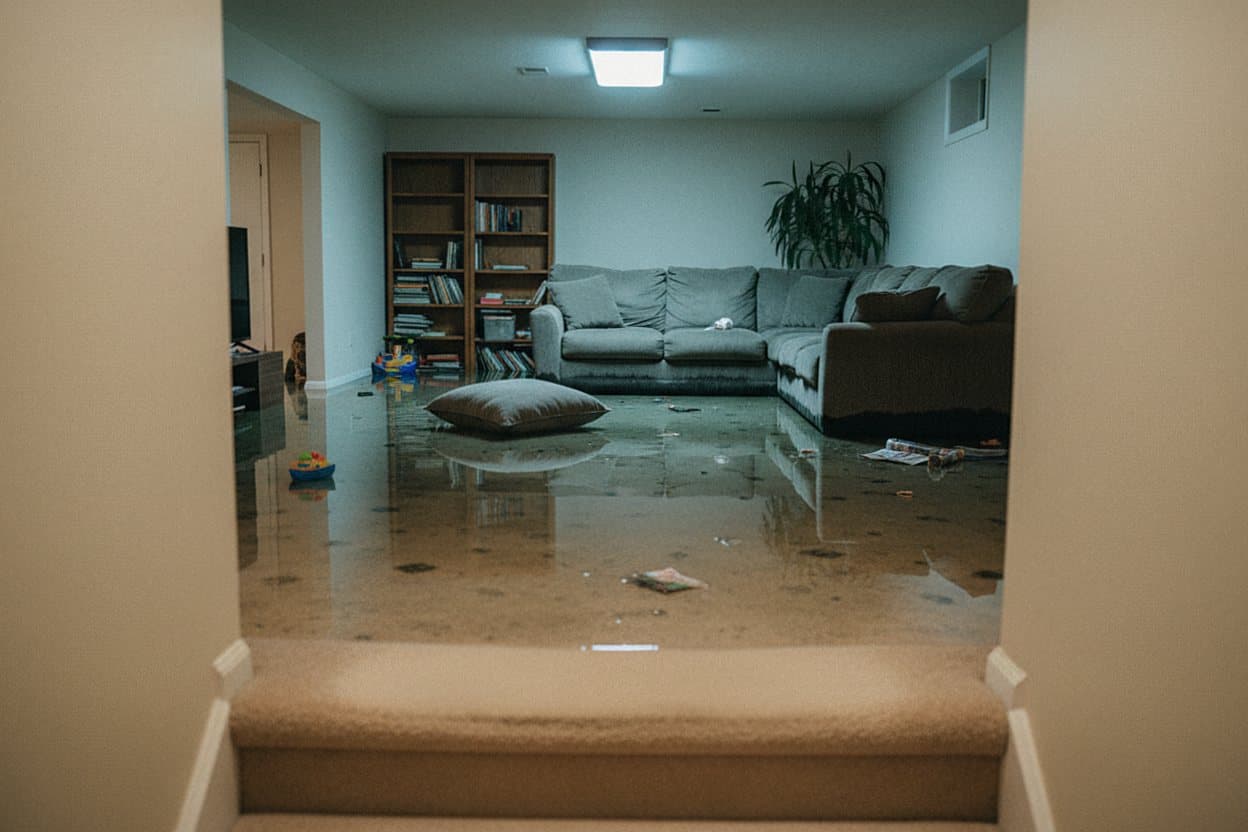
When water floods your Troy home, every hour counts. We pick up the phone, send a crew fast, and handle the water damage restoration from the first pump to the last dry wall. One call gets us moving.
Water damage restoration is a multi-step emergency job: stop the water, get it out, dry the structure, and return your property to the condition it held before the loss. We do every step of it, and we start the moment you call — our line is open 24/7, and we treat every water call in Troy as an emergency. There is a hard reason for that urgency. The EPA sets a drying deadline of 24 to 48 hours for wet materials, because mold can take hold once that window closes, and the CDC's flood guidance goes further: if something stayed wet longer than that, assume mold is already there. So our water damage restoration begins with speed. Emergency Water Removal pulls the standing water out before it creeps into the next room, with pumps, a full crew, and a clear plan you can actually follow.
We are local. Troy sits in Oakland County, and our crew covers it along with neighboring Macomb, from Rochester Hills out to Warren, so when you call you reach us, not a desk parked three states away. We walk the house with you, we find every wet spot, and we get to work. Good Water Extraction means far more than dragging a wet vacuum over the carpet. It pulls the trapped water out from under your floors and deep inside the walls, where the slow and costly damage quietly starts. That early step is the heart of honest water damage restoration.
Storms and the spring melt push water into Troy basements every single year. Our Flood Damage Cleanup clears the mess, dries the space, and saves what can be saved. We deal with the muddy water, the soaked boxes, and the sour smell that hangs in the air long after. From the first pump to the final walk through, our water damage restoration leaves your home dry, clean, and safe to live in again.
Standing water in your Troy home or shop? We pump it out fast and start drying before it soaks deeper.
Learn moreStanding water in your Troy home? We pump it out at the source and dry whatever it soaked into.
Learn moreWe dry Troy properties down to the structure, then back it up with the moisture numbers you can see.
Learn moreWhen a flood hits your Troy home, we pump out the water and dry every room down to the studs.
Learn moreWhen sewage backs up, we remove the waste, scrub and disinfect every surface, and dry the room so your Troy home is safe to use again.
Learn moreA split pipe floods fast. We stop the source and dry your home back to normal.
Learn moreWater damage compounds. Drywall, insulation, carpet pad, and subfloor all drink on contact, and every one of them gives up strength the longer it stays saturated. The EPA's 24-to-48-hour drying window matters because that is where the mold risk shifts from possible to probable — past it, the conversation changes from what can be dried in place to what has to be cut out and hauled away. We follow the drying standards set by the IICRC, the group that writes the rulebook for our trade, so we measure the moisture, track it as it falls, and keep going until the structure is truly dry and not just dry to the touch.
While you wait for our truck, here is the order we give every Troy caller. Shut off the main if you can reach it without stepping in water. Leave wet electrical alone — no outlets, no plugged-in gear, and touch the breaker only from dry floor. If the water is sewage or came in from outside, it is a health hazard, not a cleanup job: nobody wades in, nobody runs a wet-vac through it, kids and pets stay out, and the HVAC stays off. Photograph and video everything — wide shots, close-ups, the water line, serial numbers — before anything gets moved, and keep damaged materials until your adjuster has seen them. Then, if it is clean water and safe to work around, start drying; the 24-to-48-hour window is real.
After the emergency water removal, the real work starts. Structural Drying and Dehumidification pulls the leftover moisture out of wood, plaster, and concrete with strong fans and dryers that run around the clock until the readings finally come down. We set the gear, we read the meters each morning, and we stay on it until the numbers say the job is done — structural drying is complete when readings return to the documented dry standard, not when the floor feels dry.
That daily paper trail is also what protects your claim. Photograph and video the damage before anything gets moved, and hold onto damaged items until your adjuster has looked at them. We add the professional layer on top: photos before, during, and after, moisture readings logged every day, and the complete file handed to you when the equipment comes out — a documented dry-down is what gets a scope approved instead of argued about. We will also say the honest part out loud: sudden and accidental water damage is covered under most homeowners policies, flooding generally is not, and your policy decides. What we do is document the loss and give your adjuster the scope, photos, and moisture records they need.
No two jobs look the same, and in Troy the calls follow the seasons. Frozen and burst pipes lead the winter, when a cold snap finds a supply line in an exterior wall and floods the finished basement below it overnight. Spring brings the melt and the storm flooding, sump pumps quit in the middle of the heaviest rain of the year, and appliance failures — water heaters, washing-machine hoses, dishwasher lines — drip on quietly year-round. We size the water damage restoration to the damage in front of us, never more and never less. You get a clear plan and a straight answer on what comes next.
We also handle the parts nobody likes to think about. Sewage Cleanup after a drain backs up. Mold remediation when moisture has been hiding behind a wall for weeks and the smell finally gives it away. We tell you what we find, we show you the photos, and we explain the fix in plain words you can trust.
When the work is done, your home should feel like yours again, with dry floors, clean air, and walls that feel solid underfoot. That is what good water damage restoration brings, and it is exactly what we deliver in every Troy home we walk into.
Our line is open 24/7, and we treat every water call as an emergency. Tell us what you see, and we talk you through the first safe steps while a crew heads your way.
We trace where the water actually went, not just where it pooled — moisture meters and infrared thermal imaging find the wet hiding in walls, subfloors, and ceilings.
Pumps and extractors lift the standing water out while it is still liquid. Every gallon removed now is a gallon the drying equipment never has to chase.
Air movers and dehumidifiers run until the structure returns to its documented dry standard. We log moisture readings daily — the job is done when the numbers say so, not when the floor feels dry.
Whatever the water ruined, we rebuild — drywall, flooring, trim, paint — until the space reads like your home again, back to its pre-loss condition.
Our line is open 24 hours a day, and we treat every water call as an emergency — no queue, no callback list. Tell us what you're seeing and where the water is, and we get a crew moving toward your Troy address while we walk you through the first safe steps on the phone.
Shut the water off at the main valve if you can reach it without stepping into standing water. Leave wet electrical alone — no outlets, no plugged-in equipment, and only touch the breaker if you can stand on dry floor to do it. If the water is sewage or came in from outside, treat it as a health hazard: keep kids and pets out, don't wade in, and don't run a wet-vac through it. Then photograph everything before you move a single thing.
We document the loss so your claim stands on solid ground: photos before, during, and after, plus moisture readings logged every day of the dry-down. You keep the whole file, and we provide your adjuster with the scope, photos, and moisture records they need. One honest note — sudden and accidental water damage is covered under most homeowners policies, while flooding generally is not. Your policy decides, not us.
Most Troy homes dry in three to five days, but the meters make that call, not the calendar. We log readings daily and pull equipment only when the structure returns to its documented dry standard — not when the floor feels dry to the touch.
Not if the drying beats the window. The EPA sets a drying deadline of 24 to 48 hours for water-damaged materials because mold can take hold once that window closes, and the CDC's flood guidance says to assume mold is present in anything that stayed wet longer than that. That's exactly why we start drying the day you call.
It depends on the source. The ANSI/IICRC S500 standard sorts water into three categories: Category 1 is clean water from a sanitary source like a burst supply line; Category 2, gray water, is significantly contaminated — washing-machine discharge, sump failures, seepage; Category 3, black water, is grossly contaminated and can carry pathogens — sewage backups and rising water from rivers or streams. And despite what you may have read, storm water isn't automatically Category 3. The on-site inspection determines the category.
It depends on the water category and how far it traveled — a contained supply-line leak and a flooded finished basement are very different jobs. What we promise is a documented scope: you see exactly what's wet, what we're doing about it, and why, before the work moves forward.
Usually not. For a clean-water loss confined to part of the home, most families stay put while the equipment runs. A sewage backup, or damage that takes out the kitchen or the only bathroom, is a different conversation — and we'll have it with you straight after the inspection.
A musty smell means water is still trapped somewhere — under flooring, inside a wall cavity, behind a cabinet. We find it with moisture meters and infrared imaging instead of guessing, then dry it down to the numbers so the smell leaves with the moisture.
All winter long — frozen supply lines are one of the most common calls we take in Troy. They tend to split inside an exterior wall and flood a finished basement overnight. We stop the source, pull the water, and open and dry the wall cavities before mold gets its window.
Serving Troy and the surrounding Oakland County area.


